The Basis Trade Is Unwinding
Published
Hedge funds are unwinding the Treasury basis trade from the 5-year out to the 30-year. Across the five futures in that range, leveraged funds cut their net short by 702,999 contracts between 1 and 22 September, about 70bn of face value. Asset managers, the other side of the trade, cut their net long by 494,964 contracts.
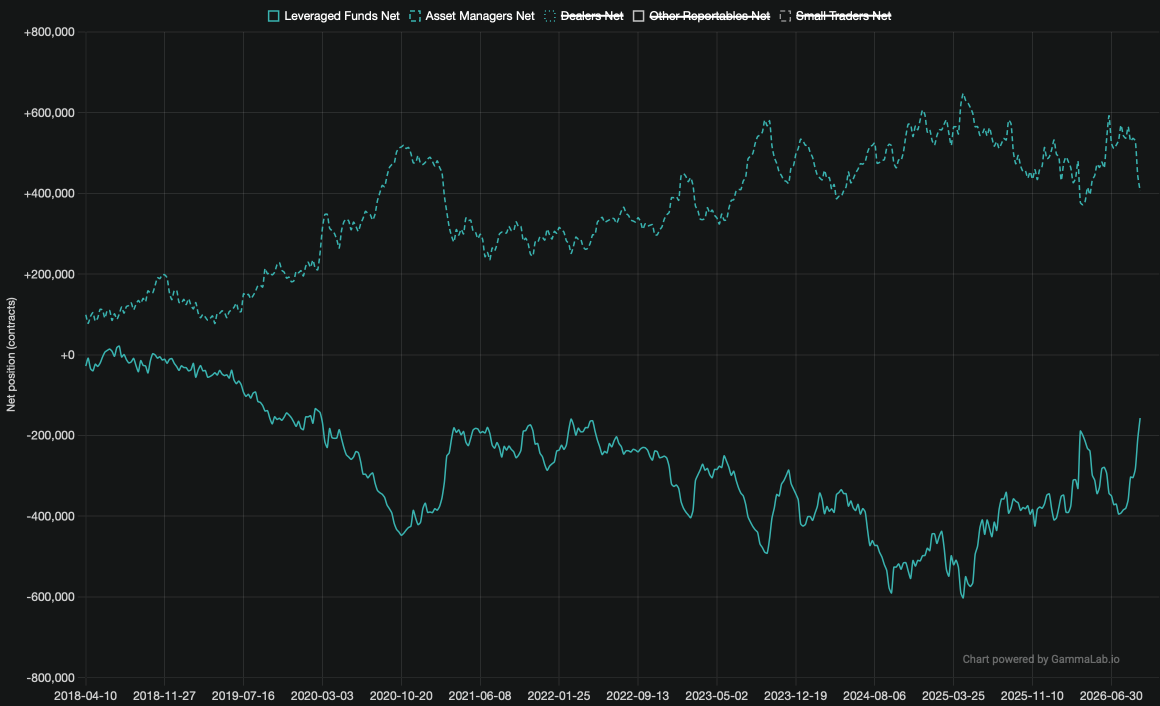
Only the 2-year went the other way. The trade there was partly rebuilt, with the net short up 82,706 contracts.
How the trade works
A hedge fund buys a cash bond, sells the matching futures contract, and pockets the small gap between the two prices at delivery. It pays for the bond by borrowing in the repo market against the bond itself, often with little or no haircut. The profit per trade is a few basis points, so funds run it with heavy leverage to make it worthwhile.
The trade exists because asset managers prefer to hold Treasury futures rather than the bonds, because futures need little cash up front. Their demand keeps futures slightly rich to cash bonds, and that premium is the hedge fund's profit.
The trade adds depth to the cash market, but it also makes that market dependent on short-term borrowing. If repo costs or futures margins jump, many funds have to sell bonds at once, and dealers can only take so much onto their balance sheets. That is what happened in March 2020, when forced selling helped freeze the market until the Fed stepped in with large bond purchases.
The numbers
From 1 to 22 September, the leveraged-fund net short shrank by 195,139 contracts (30-year bond + ultra bond). Asset managers cut their net long by 219,605. Since 30 June the combined net short has shrunk by 265,429 contracts, which means almost three quarters of the move here came in the last three weeks. At $100,000 of face value per contract, the September cut equals about 20bn.
In the 10-year, the leveraged-fund net short shrank by 163,234 contracts (10-year + ultra 10-year) from 1 to 22 September, about 16bn of face value, but asset managers cut their net long by only 64,277. Between 30 June and 1 September the combined net short had grown by 204,726 contracts, so it still ended the period 41,492 contracts larger than in June.
The 5-year saw the biggest move in contracts. The leveraged-fund net short shrank by 344,626 contracts, about 35bn of face value, and asset managers cut their net long by 211,082. Each 5-year contract carries a fraction of a long bond's rate risk, so the move matters less for duration than the count suggests.
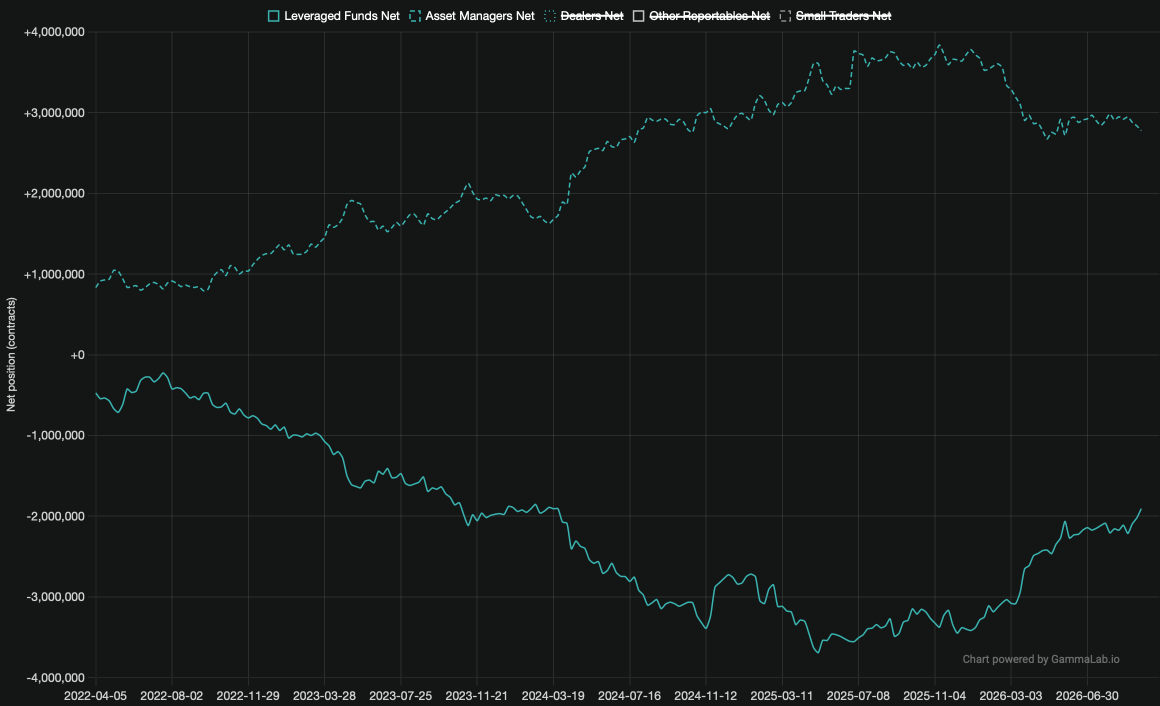
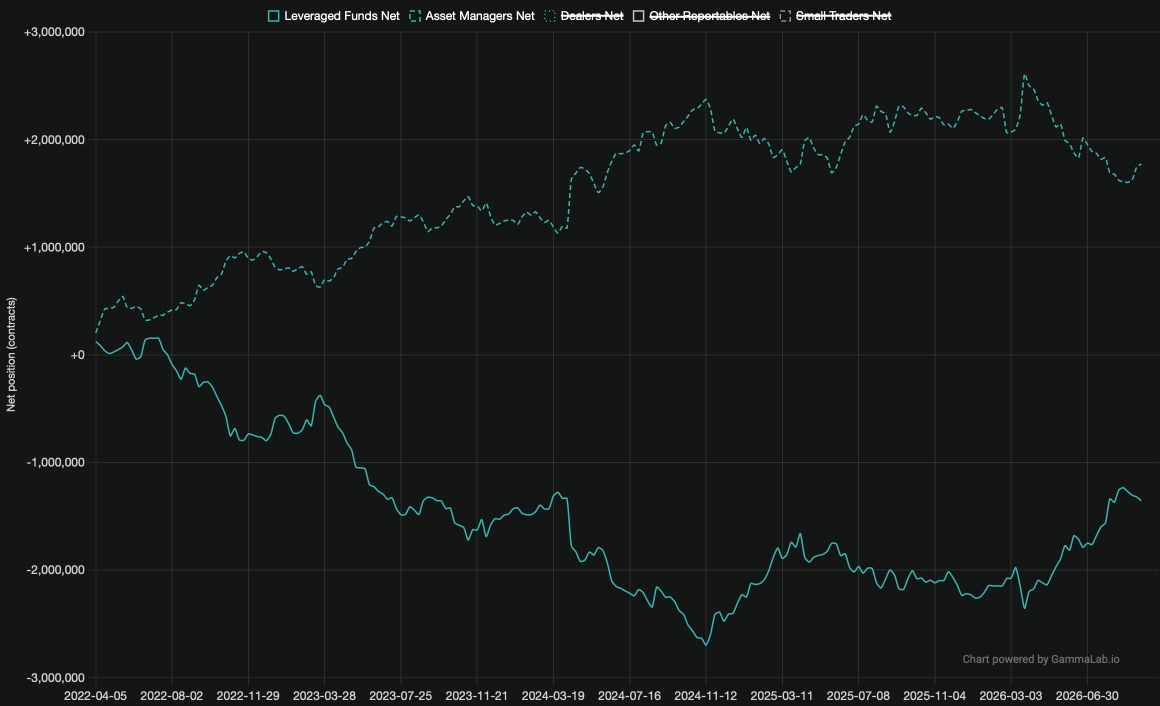
The 2-year went the other way, and its net short grew by 82,706 contracts in September, after shrinking by 480,841 over the summer.
Why it is happening
The trade is unwinding because the futures premium it earns has narrowed. Asset managers cut their net long by ~495K contracts from the 5-year out in September, and less demand for futures means a smaller premium, or less profit per trade. Two forces are behind that.
1. A rate-hiking Fed has pushed investors away from duration. The Fed raised rates by a quarter point on 16 September, its first hike since 2023, and yields rose, led by the short end. Asset managers who trim long-bond exposure cut futures first, since that is how many of them hold it. Their buying shifted toward the 2-year instead.
2. Banks can now compete for the same cash bonds. An eased leverage rule for the largest banks took effect on 1 April 2026 and lets them hold more cash Treasuries without extra capital. Larger dealer inventories, along with Treasury's buybacks of older bonds, narrow the gap between cash and futures prices from the cash side.
What it could mean for the market
Funding is not the problem, at least not yet. The overnight repo rate, SOFR, stayed close to the fed funds rate in September, even after the hike. A funding squeeze would show up there first. So far this looks like an orderly retreat from the 5-year out, with the 2-year partly rebuilt.
The risk is a disorderly unwind. A volatility spike that raises futures margins or repo haircuts could force many funds out at once, as in April 2025, when about 60bn of related swap-spread trades were unwound quickly. Calm repo rates argue against that today, and smaller net positions leave less to unwind.