Vol Control Check: Near the Top of the Year's Range
Published
Volatility-targeting funds hold about $245B of S&P 500 exposure as of Friday's close, according to GammaLab's model. That's higher than on 89% of trading days this year, and right back where the year started ($244B on January 2).
The year's peak was $272B on January 21, when market volatility sat near 10%. The low was $148B on April 10, after volatility jumped to almost 19%. More recently, exposure peaked at $246B on September 18 (see chart below).
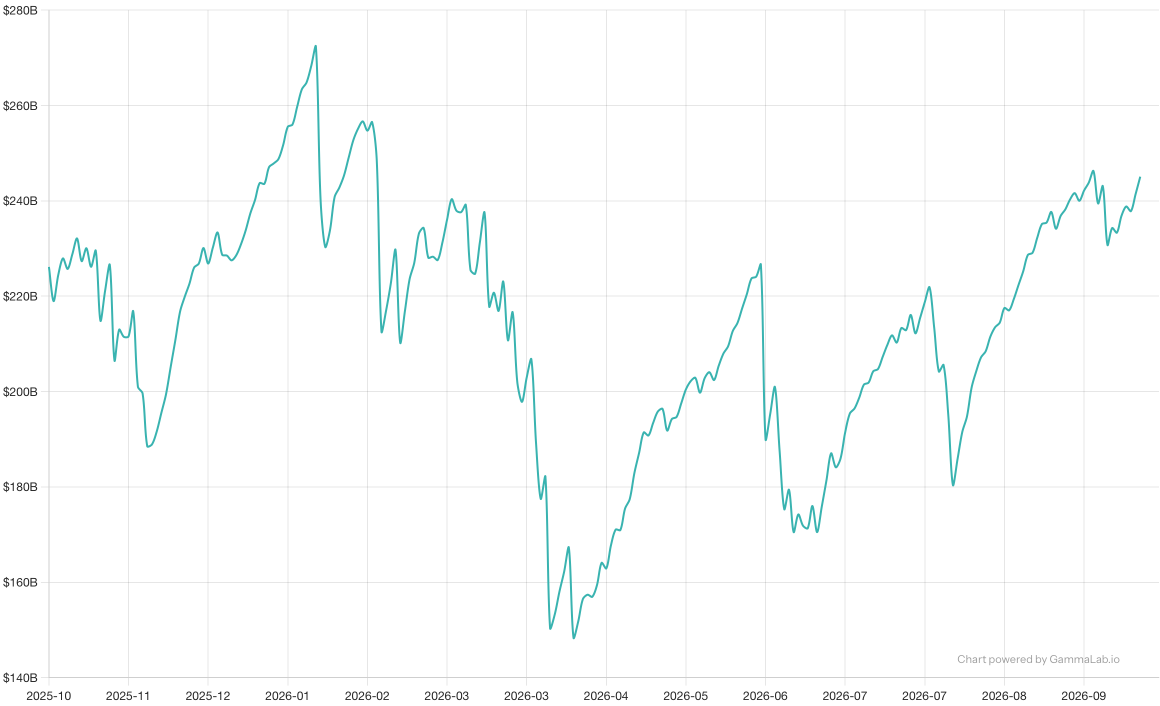
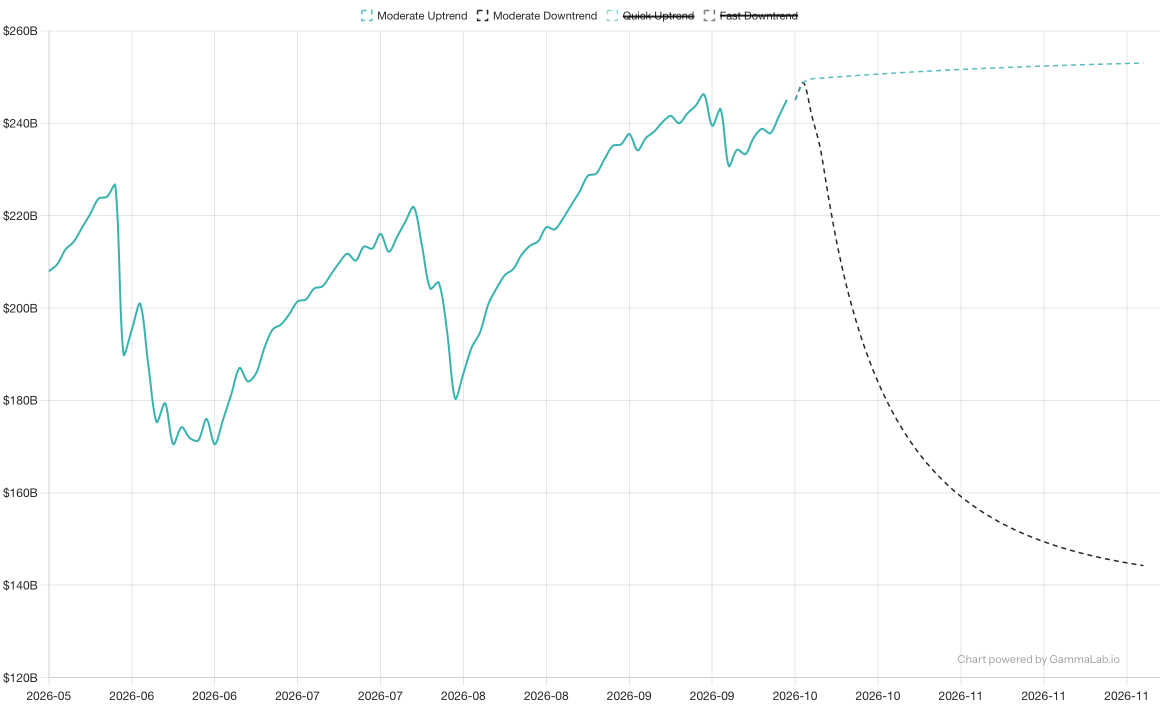
Being this full means there is a lot to sell if things turn. In the moderate-downtrend scenario, market volatility rises to about 20%: a steady grind lower, not a crash, and in that case vol-targeting funds would sell roughly $20B in a one-week window, and $35B after two weeks (chart below).
Vol-control exposure is strongly correlated to a fund's volatility target. GammaLab models three fund types with targets ranging from 5% to 15%, sized by our own estimates of the money that follows each.
Right now, cautious funds (mostly insurance products) are 88% deployed, middle funds ("managed volatility" options inside variable annuities) are 58% deployed, and aggressive funds (e.g. HF strategies) are 66% deployed with a leverage of about 1.3 (peaked at 1.5 on January 21).